Fireworks can trigger trembling, pacing, hiding, barking, and escape attempts in many dogs. A simple plan—set up early, follow during the noise, and review afterward—can lower stress and prevent accidents. This checklist-style guide focuses on safe, realistic actions that fit most homes and travel plans. For more guidance, see Tips for taking care of your pets when fireworks are booming.
Dogs experience fireworks as a fast-moving storm of sensations: loud booms, sudden flashes, and strange smells that appear without warning. Even confident dogs can tip into a fight-or-flight response when the pattern is unpredictable. For further reading, see 10 Tips for Keeping Pets Safe and Calm During Fireworks.
For broader safety reminders around holidays and fireworks, the American Veterinary Medical Association and ASPCA both recommend keeping pets indoors, ensuring current ID, and planning ahead.
The biggest wins often happen before the first boom. Think “reduce surprises” and “increase safe choices.” If your dog has panicked before, don’t wait until the last minute—prep early and keep it simple.
| Task | What to prepare | Why it helps |
|---|---|---|
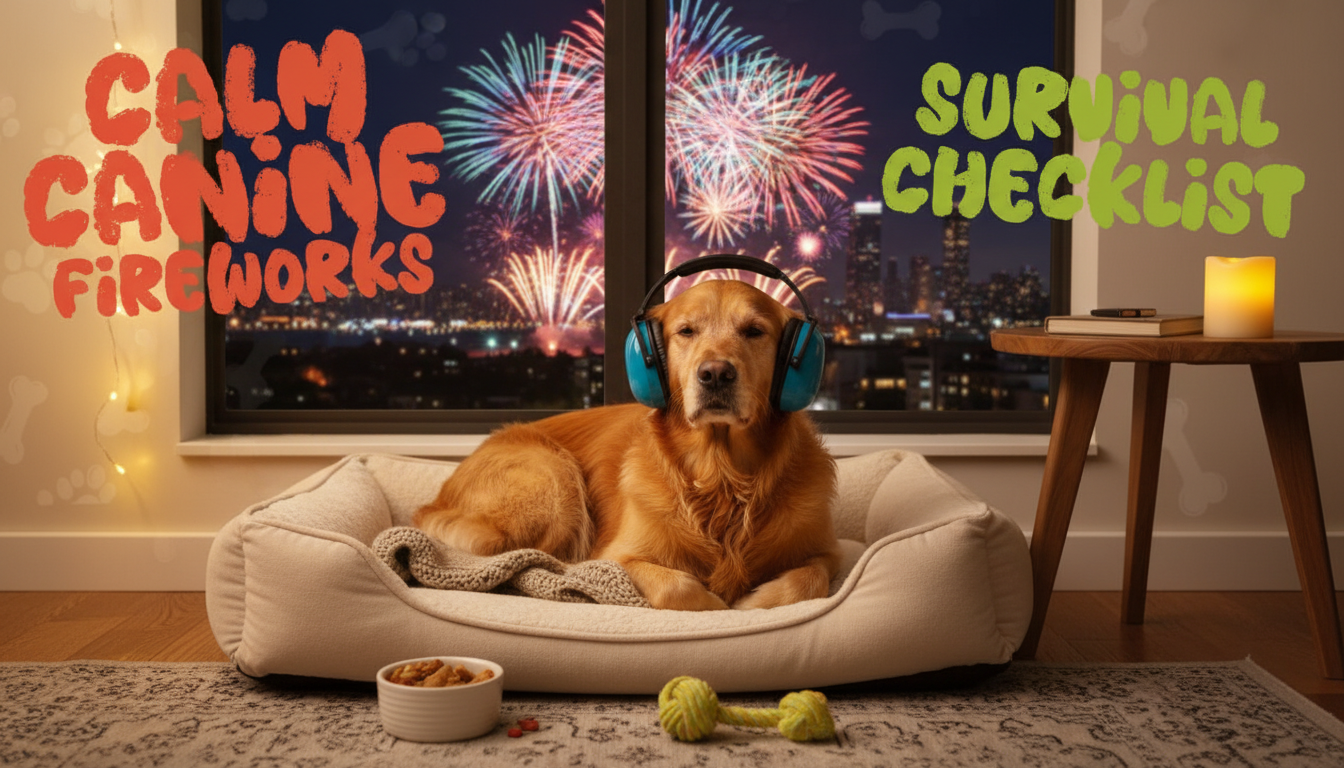
| Safe room | Interior room, bedding, water, chew, dim lighting | Creates a predictable retreat and reduces stimulation |
| Noise management | Fan/white noise, music, TV, closed windows | Helps blunt sudden sound spikes |
| Escape prevention | Check fences, latches, window screens; leash by the door | Reduces risk of bolting |
| Comfort + enrichment | Lick mat, stuffed toy, chew, familiar blanket | Encourages soothing, repetitive behaviors |
| ID readiness | Tag + microchip info + current photo | Improves chances of quick reunion if lost |
If you like having a one-page plan you can follow under pressure, keep a copy of Calm Canine Fireworks Survival Checklist – Essential Guide for Managing Dog Anxiety During Fireworks in your kitchen drawer or near the leash.
On fireworks days, timing matters. The goal isn’t to exhaust your dog—it’s to reduce jittery energy while keeping the day predictable.
For some dogs, gentle, consistent pressure can feel grounding when introduced ahead of time. If that’s a good fit for your dog, the Warm Teddy Bear Pet Vest can be used as a cozy layer while you supervise comfort and temperature indoors.
When fireworks start, shift into “safety mode” and keep your plan steady. Many dogs settle faster when nothing else in the household becomes chaotic.
Tip for multi-boom evenings: keep water accessible and easy to reach in the safe room. A stable setup such as the Elevated Ceramic Pet Bowl Stand with Slanted Anti-Spill Bowls can help reduce splashing if your dog is pacing or bumping around.
Support is fine if it helps your dog settle, such as calm talking and gentle contact if your dog seeks it. Avoid frantic soothing or restraining a dog that wants space; focus on safety, predictable routine, and giving your dog choices.
Use a repeatable routine each evening: safe room ready, earlier potty breaks, steady noise masking, and a rotation of chew/lick enrichment. If panic is severe or escalating, consult a veterinarian for a longer-term management plan.
Many dogs benefit from gentle, consistent pressure if it’s introduced positively ahead of time. Ensure correct fit, monitor comfort and overheating, and remove it if your dog shows signs of distress.









Leave a comment