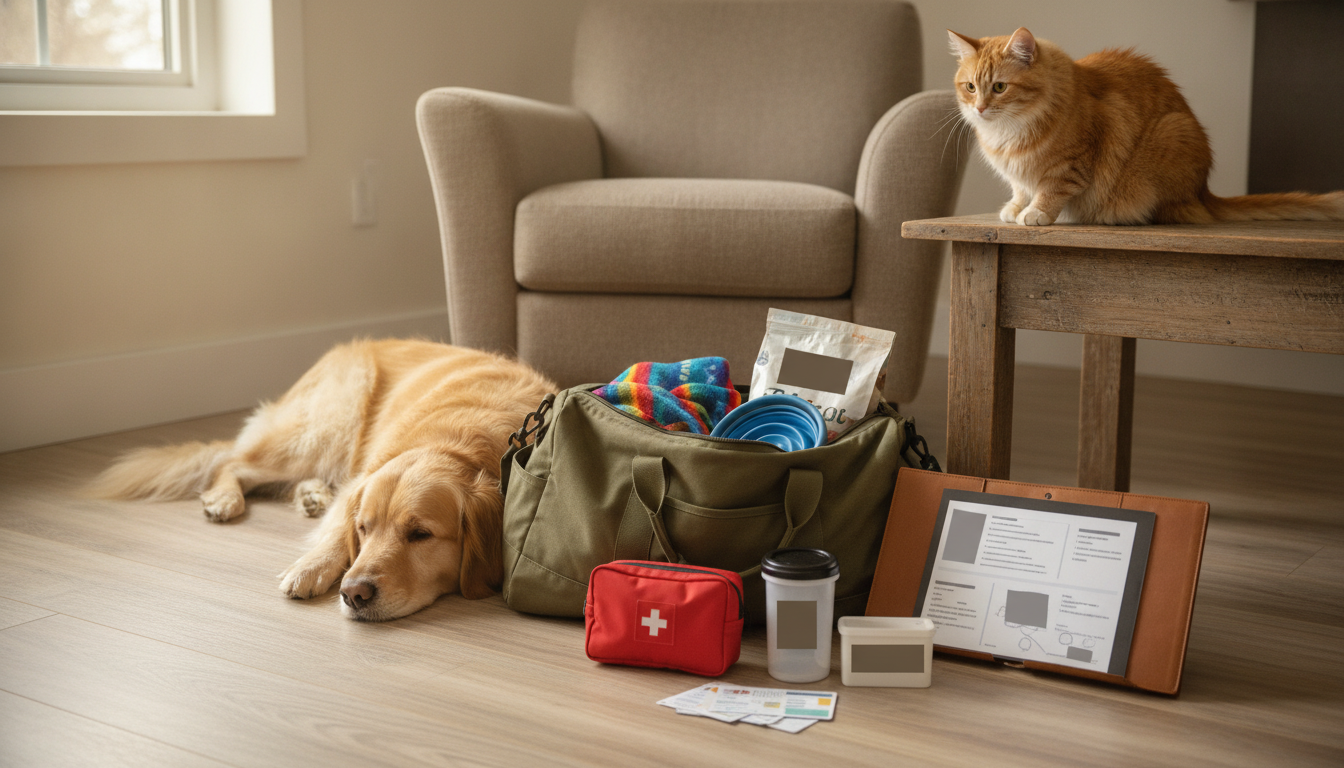
Emergencies rarely arrive with perfect timing. When something changes fast—an evacuation notice, a medical scare, a sudden power outage—pets still need food, medications, safe transport, and clear instructions that someone can follow without guessing. A solid emergency pet plan turns scattered notes into one simple, printable set of steps that works at home, on the road, or with a pet sitter when minutes matter.
Authorities like Ready.gov and the American Veterinary Medical Association (AVMA) consistently recommend planning ahead for pet identification, medical needs, and evacuation logistics. The goal is straightforward: make sure any responsible adult can keep your pet safe if you’re stressed, rushing, or temporarily unavailable.
A useful plan is more than a shopping list. It’s a quick-reference profile for each pet, paired with a few decisions you make now (while calm) so you don’t have to make them later (while panicked).
When these items are written down (not just remembered), you reduce the chance of missed meds, lost records, or last-second scrambling for a carrier.
If planning feels overwhelming, treat it like a short project with a clear order. The goal is a “good enough” plan today that can be refined later.
| Plan item | What to write down | Where to keep it |
|---|---|---|
| Pet ID | Microchip #, tag info, distinguishing features, 2 photos | Printed folder + phone album |
| Vet & emergency clinic | Clinic name, phone, address, after-hours number | Folder + car copy |
| Medications | Name, dose, schedule, refill info, allergies | Go-bag + folder |
| Destinations | 2 pet-friendly options and addresses | Folder + phone notes |
| Care instructions | Feeding, behavior notes, handling and muzzle/carrier notes | Folder + shared digital copy |
| Authorized caregiver | Name, phone, spare key location, written permission | Folder + wallet card |
A go-bag is your “leave now” kit. Build it once, store it near the exit, and refresh it on a schedule so it’s never out of date.
For cold-weather regions or winter travel, a simple warm layer can make stressful transitions easier. Consider keeping a dedicated emergency garment like the Warm Teddy Bear Pet Vest in your kit so it doesn’t get “borrowed” for everyday use.
The best plans are flexible. Your core documents and handling notes stay the same; what changes is your emphasis.
During displacement, routine helps. Familiar feeding setups can reduce spills and encourage appetite, especially in unfamiliar spaces. A stable, easy-to-clean station like the Elevated Ceramic Pet Bowl Stand with Slanted Anti-Spill Bowls can be a practical add-on for longer stays.
To make planning faster (and easier to maintain), the Ready for Anything: Build Your Emergency Pet Plan – eBook Guide for Creating a Pet Emergency Plan is designed to walk through the exact details families tend to miss when they’re rushing.
For additional guidance on pet-specific readiness, the American Red Cross pet disaster preparedness page is a helpful cross-check for your kit and evacuation steps.
Do a quick monthly check to confirm supplies, meds, and phone numbers are still current. Plan on a full review every 6 months, and update immediately after any medication, address, or caregiver change.
Keep microchip and ID details, vaccination records, recent photos, a medication list with doses, vet and 24/7 emergency clinic contacts, and written caregiver authorization. Store a printed set in a grab-and-go folder and a digital copy that a trusted contact can access.
Pack at least 3 days of supplies, and aim for up to 7 days when feasible. Rotate food and medications regularly and tailor quantities to your pet’s medical needs and diet restrictions.













Leave a comment