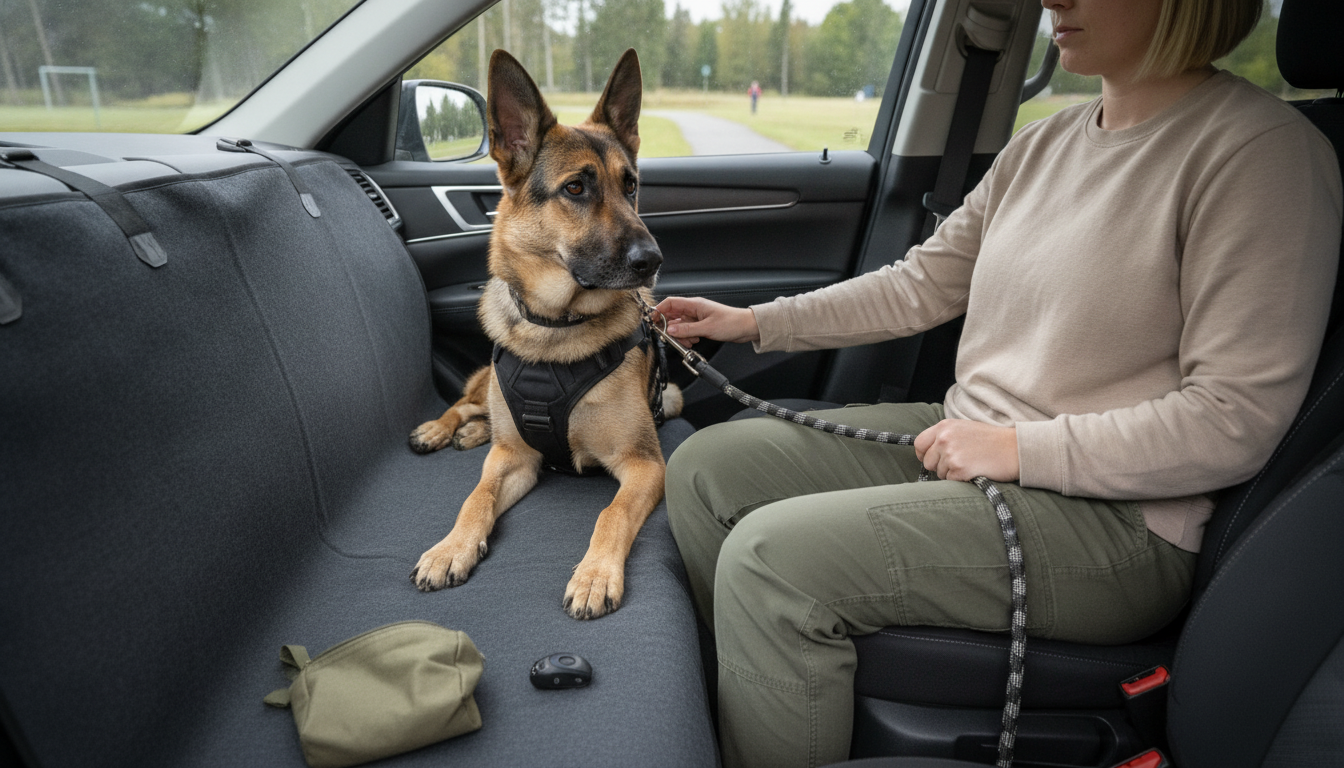
“Military-style” dog training is less about harshness and more about structure: clear rules, consistent follow-through, and reliable obedience under distraction. The goal is a calm dog that responds the first time, whether you’re at home, in public, or around exciting triggers.
Pick a short list of core commands that create day-to-day control: sit, down, stay, come, heel/loose-leash walk, and place (go to a mat/bed). Write down what “success” looks like for each (for example, “stay for 30 seconds while I step 10 feet away”).
Train 5–10 minutes at a time, 2–4 times daily. Begin in a quiet room, then gradually add difficulty: distance, duration, and distractions. End sessions on a win so your dog stays eager and confident.
Give one cue once, in a normal voice. If your dog doesn’t respond, calmly reset and help them succeed (with a lure, leash guidance, or stepping closer), then reward. Avoid repeating commands, which teaches your dog that the first cue doesn’t matter.
Mark the correct behavior immediately (a clicker or a consistent “yes”), then reward. Use high-value treats for hard tasks and phase to praise/toys as reliability improves. If your dog breaks a command, respond predictably: guide them back, shorten the challenge, and try again—no yelling, no chaos.
Practice commands at the front door, on walks, near other dogs, and around guests. Real reliability comes from training in many locations, not just one room.
For a step-by-step breakdown of drills, progression, and common mistakes to avoid, visit the full guide on military-style dog training.
Strict training focuses on control, while effective training focuses on clarity and consistency. You can be firm about rules without using intimidation or harsh corrections.










Leave a comment